Here’s a question most businesses aren’t asking enough
When you use AI tools… where does your data actually go?
AI has made it ridiculously easy to generate content, analyse information, and automate workflows. It feels like magic.
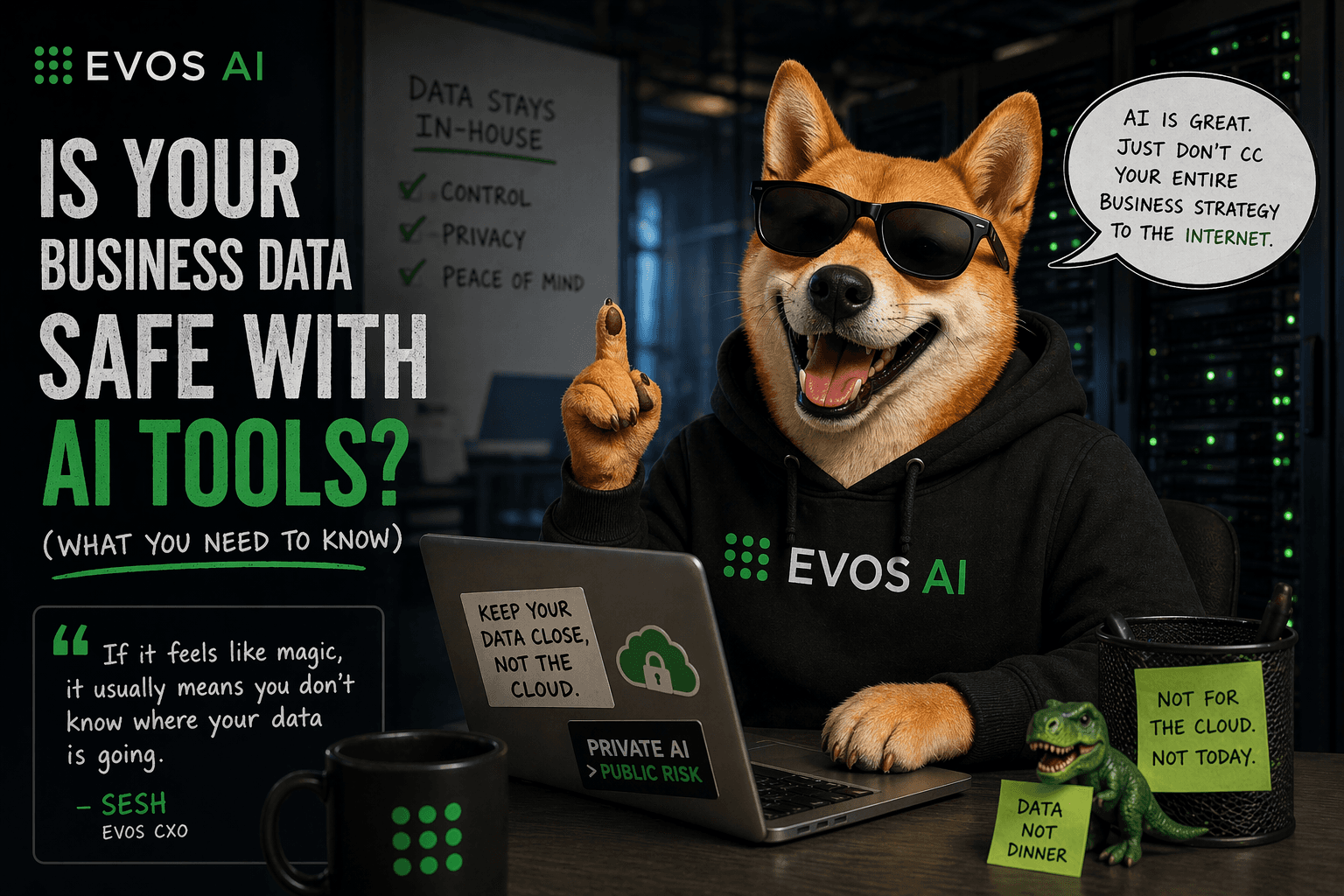
But as Sesh (our CXO at EVOS) puts it:
“If it feels like magic, it usually means you don’t know where your data is going.”
And he’s not wrong.
Here’s what’s really happening behind the scenes.
1. Your data doesn’t always stay with you
Most AI tools today are cloud-based. That means when you input:
Internal documents
Customer data
Pricing strategies
“Quick drafts” that are actually very confidential
…it’s being sent somewhere else to be processed.
Now, to be fair, most providers are doing the right thing. But the reality is still:
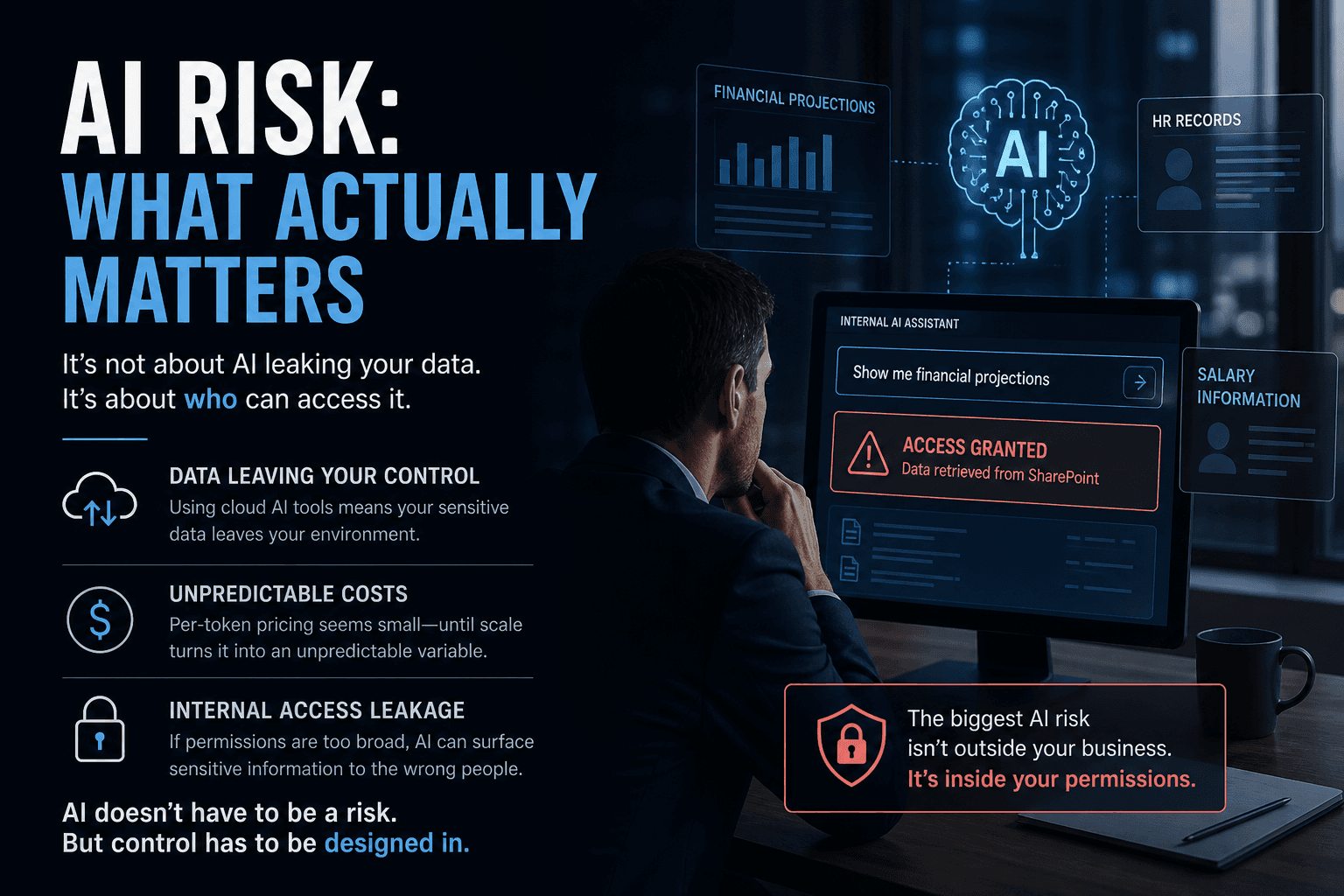
Your data is leaving your environment.
Sesh’s take on this is pretty simple:
“If I emailed our supplier pricing to a random server, I’d get fired. But somehow doing it through AI feels fine?”
2. Not all AI providers are created equal
There’s a common assumption that all AI tools handle data the same way.
They don’t.
Some:
Store prompts temporarily
Log usage for monitoring
Use interactions to improve models
Others lock things down more tightly — usually with more cost or complexity.
The issue isn’t that these systems are “bad.”
It’s that most businesses don’t actually know what’s happening.
3. The real risk isn’t hacking — it’s leakage
When people think about security, they think about hackers in hoodies.
But with AI, the bigger issue is usually much less dramatic:
You giving away more than you realise.
Sesh explained it best during a team discussion:
“No one’s breaking in. We’re just politely handing over our IP in bullet points.”
Things like:
Negotiation tactics
Internal processes
Pricing logic
Customer insights
Individually, they seem harmless. Together, they’re your competitive advantage.
4. Compliance teams are starting to panic (quietly)
If you’re in:
Healthcare
Finance
Legal
Government
This isn’t just a “nice to think about” problem.
It’s a real one.
Using AI tools without understanding where data flows can create compliance risks — even if you didn’t mean to.
Or as Sesh put it:
“There’s nothing worse than explaining to legal that your chatbot now knows your entire business model.”
5. Convenience is doing a lot of heavy lifting
Let’s be honest — the reason everyone uses these tools is because they’re easy.
Open a tab
Paste something in
Get an answer
Done.
But that convenience comes with a trade-off:
What you gain | What you give up |
|---|---|
Speed | Control |
Simplicity | Visibility |
Low upfront cost | Long-term predictability |
At small scale, it’s fine.
At scale, it becomes… noticeable.
6. So what’s the alternative?
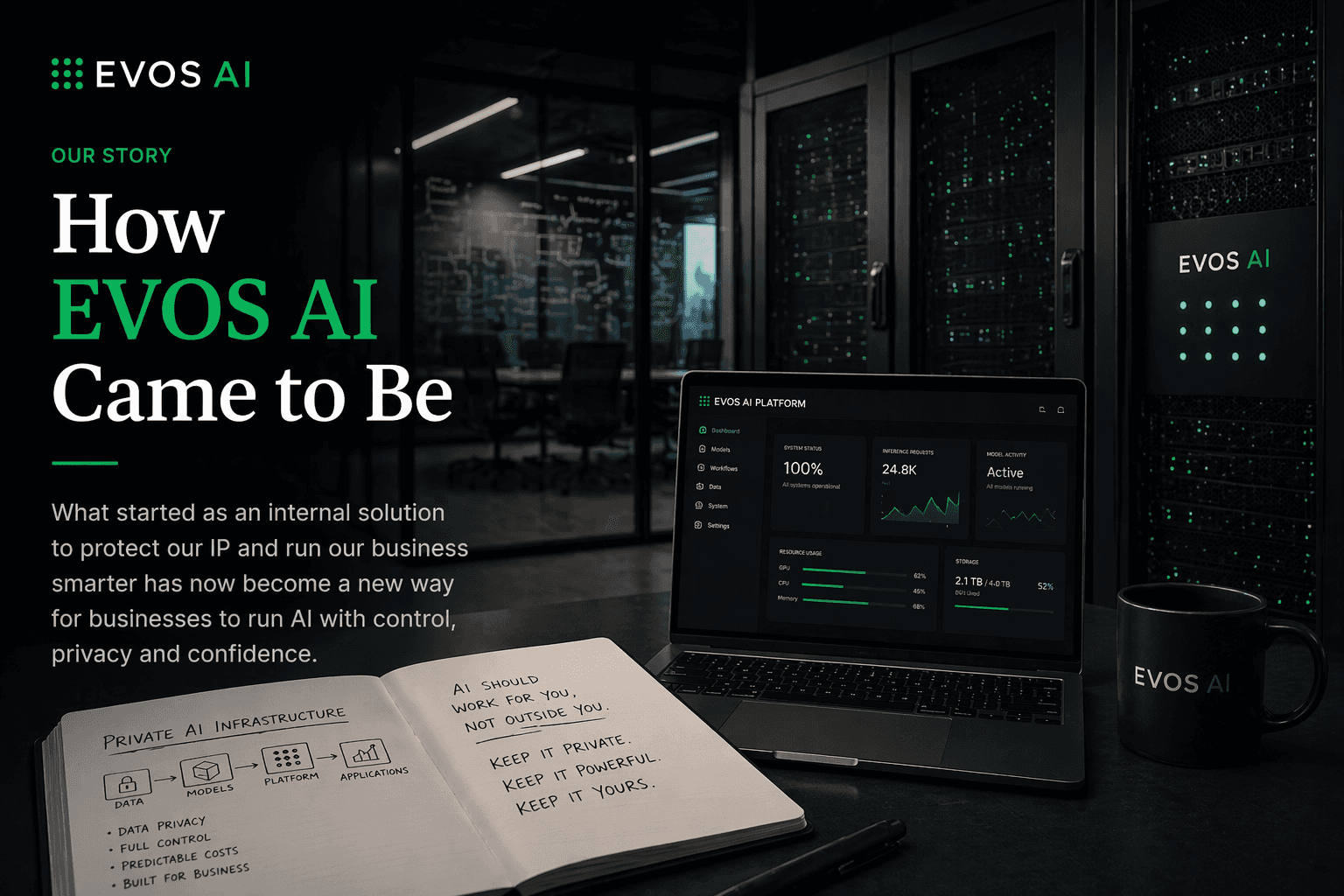
Some businesses (including us at EVOS) took a different approach.
Instead of sending data out, we brought AI in.
Running AI inside our own infrastructure means:
Data stays internal
No external API calls
Full control over usage
It’s less “open a tab and hope for the best”
and more:
“This is part of how our business actually runs.”
The takeaway
AI isn’t the risk.
Not understanding how you’re using it is.
Or, in classic Sesh fashion:
“AI is great. Just don’t accidentally CC your entire business strategy to the internet.”
If you’re serious about using AI in your business, the question isn’t:
“Should we use AI?”
It’s:
“How do we use AI without losing control of our data?”